
A strong profile earns attention.
A steady publishing rhythm builds familiarity.
Neither matters if you are measuring the wrong thing.
LinkedIn is full of activity that looks impressive but does not move business. Likes and comments have their place, but they are secondary. The real value comes from visibility among the right people and from messages that show your ideas are landing in the right rooms.
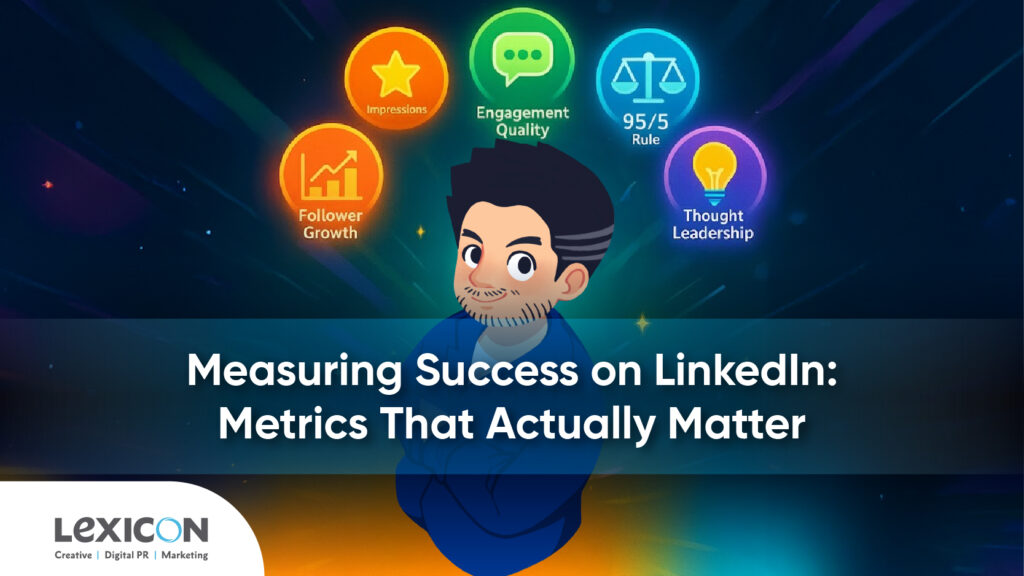
That means focusing on two key metrics first: impressions and follower growth.
Impressions: The Visibility Metric
As the leading LinkedIn management agency in Bangkok, with a speciality in B2B marketing, we are asked often what success looks like on LinkedIn. The first thing to get right is impressions.
Impressions show how many people have seen your content. They cannot be faked or misunderstood. They are the simplest and most reliable measure of whether your ideas are being seen by the right audience.
If your business operates in Thailand and Southeast Asia, your impressions should come primarily from Bangkok, Singapore, Ho Chi Minh City, Jakarta, and Kuala Lumpur. If they are coming from London or Los Angeles, the post may look good on paper but do nothing commercially.
A viral post with the wrong audience is meaningless. I recently had a few posts go massively viral, but only eight percent of the viewers were in Bangkok. Nice for the ego. Irrelevant for business as my target audience is almost exclusively Bangkok-based.
In previous articles we have spoken about curating your audience. Once you are in that flow, give yourself some simple KPIs that only you see.
Start with a simple KPI: 1,000 impressions per month. Then aim to grow it steadily.
Think of 1,000 impressions as 1,000 people reached. Imagine cold-calling 1,000 people in a month. Or speaking to 1,000 people on stage. That is the level of visibility your content achieved. It is not a small number. Once you are reaching 50,000 people with your posts, you are reaching more than if you were on the front page of the Bangkok Post. Or if you attended every networking event in town for the next 10 years.
Over time, track which hooks, visuals, and topics perform best. These are clues to what your market values and how they perceive you. Don’t worry too much about the performance of individual posts though, some will perform better than others, but look at your overall numbers weekly and monthly.
More niche content will reach less people and broader content will reach more. Don’t worry about it. The niche content will reach more relevant audiences. The key is a well balanced content calender. Mix up your content formats to focus on showing empathy and authority to your audience.
While image and text only posts do well, as discussed in our previous article, when it comes to CEO branding these days, Bangkok video production is a key differentiating factor to help leaders stand out from AI-generated content. We run the best podcast studio in Bangkok, if you need any help with that.
Follower Growth: Building a Captive Audience
Impressions show who is seeing your ideas. Followers determine who sees them next.
Earlier in this series, we discussed curating your network intentionally. This is where that discipline pays off.
Your followers are are a captive audience of potential buyers, peers, and advocates who already know your name and trust your voice.
Set a monthly connection goal. Around 400 targeted connection requests per month is a solid start. Prioritize people in your market, industry, and region. These are the people who will form your organic audience: the group you can educate, inform, and eventually sell to.
If you are doing this consistently, you can build your entire target audience inside LinkedIn.
Every post will reach the right people, repeatedly, without a single dollar spent on advertising. It is the most efficient lead nurturing system available to CEOs.
Follower growth compounds. Each new connection improves the visibility of every future post. Over time, your ideas spread faster, your brand feels more familiar, and your pipeline warms itself.
Engagement Quality: Focus on Signals, Not Noise
Engagement is useful only when it comes from the right people. A hundred likes from strangers are less valuable than one comment from a potential client.
Who is interacting with your content? What are they reacting to? Which ideas start real conversations in your inbox afterward?
The goal is not to look popular. It is to look credible. High-quality engagement tells you your positioning is right and your message is landing where it should.
Do not chase applause. Use engagement as a diagnostic tool to understand which stories resonate and which formats cut through.
The 95/5 Rule
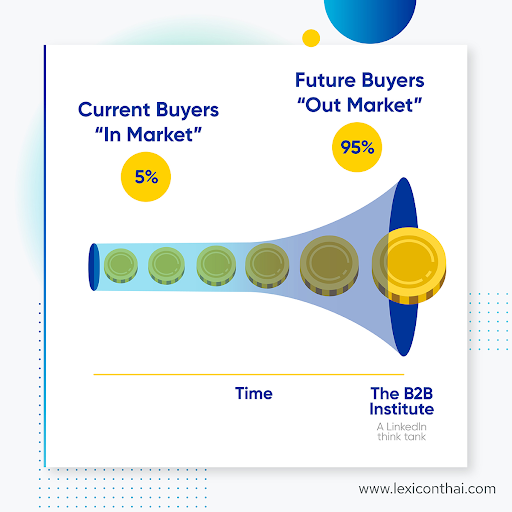
Only 5% of your audience is ready to buy at any given time. The rest are not in the market yet. Your job on LinkedIn is to stay constantly visible, so that when they enter that buying window, your name is the first one they think of.
That is why impressions and follower growth matter most. They keep you present in the feed, building familiarity long before sales conversations begin.
You are not posting initially to close deals. You are posting to educate, inform and entertain your target audience and help them to succeed by freely sharing your expertise and helping solve your ideal client’s pain points, even before you have spoken to them. As a result, you will be remembered when the timing is right to make a sale.
That’s why the previous articles in this series are so important. If you are constantly showing up every day in front of the right audience and proving your authority and empathy, the selling process is simple. The client already knows and trusts you, then it’s just about signing on the dotted line.
Thought Leadership
Being a thought leader on LinkedIn is about being customer-centric with a service-first mindset. Givers gain! When you share useful ideas consistently, you help your audience make better decisions and solve real problems. That value builds trust.
Over time, it translates into more speaking invitations, more people approaching you at events because they already know your name, and more opportunities landing in your inbox. Visibility turns into reputation. Reputation turns into business. And it all starts with showing up for your audience every week, and giving them something worth their time.
Need some help getting started? Get in touch.
About the Author
David Norcross is an award-winning LinkedIn & marketing & Executive Branding expert with over 15 years of experience in the industry and over 20,000 followers on LinkedIn. He’s the founder and CEO of Lexicon as well as the Chairman of the British Chamber of Commerce in Thailand Marketing & Communications Committee.
Lexicon is an award-winning brand storytelling agency focusing on telling impactful stories for clients based in Thailand and South East Asia. Specializing in LinkedIn management, podcast studio and video production in Bangkok.





 English