
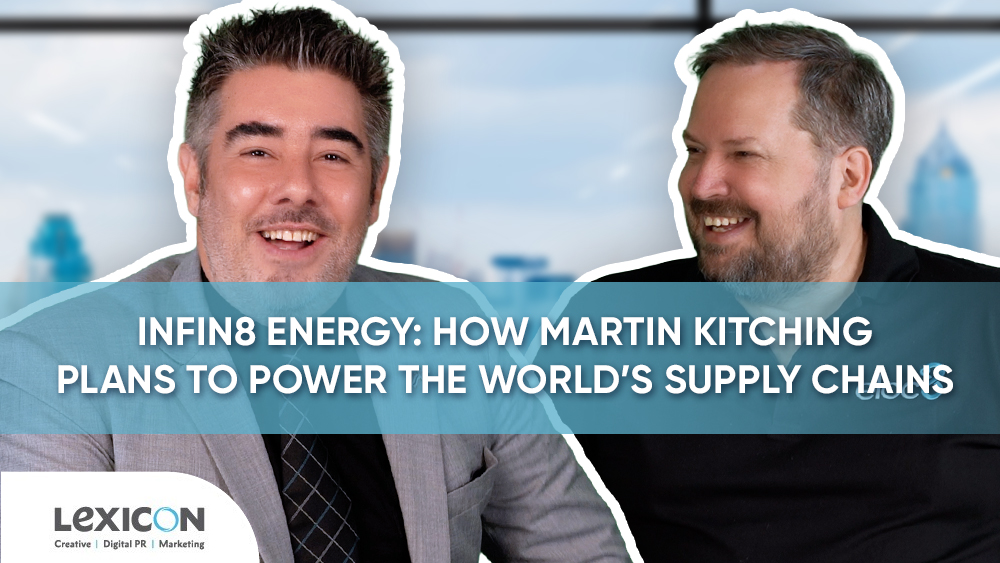
David: Hello. Welcome to another edition of Bangkok Thought Leaders. I’m here today with a very special Bangkok Thought Leader, Martin Kitching. He is the Founder and CEO of eloc8, a company doing incredible things in the tech space. So, Martin, tell us, first of all, what is eloc8?
Martin: So eloc8, we get asked this question quite regularly. So eloc8 is ‘eloc8’. So the ‘e’ standing for ‘energy’; ‘loc8’ standing for ‘location’. So the whole purpose of eloc8 is to work with partners to develop leading technology, disruptive technology, into different marketplaces where we’re basically able to bring our energy harvesting capabilities and energy harvesting patented technologies, along with location and other monitoring type technologies to the asset management, cargo management industries.
David: Okay, so I’ve been hearing a lot recently from you and from many other people about this game-changing breakthrough, the energy harvesting, the kinetic energy. Can you tell us a bit more about that, please?
Martin: Yeah. So we were approached maybe two years ago now in Hong Kong with one of our partners, AviusULD. And we were approached by a client who said that, basically, this is what’s happening with the cargo that all of the competition at this moment in time are producing solar panel technology. So this is what the industry store is energy harvesting at that point, that basically then for solar panels, the problem being is cargo moves on night and there’s not much solar energy during the night. So this client said to us that basically you need to be able to harvest what happens in cargo all the time. Cargo is designed to move. So you need to harvest movement. So we then had quite an… I was going to say extensive, but actually, it was quite short lived. In one year, we’ve then developed a patented energy harvesting technology that is able to harvest low-energy vibration from such as aircraft movement to high-level vibration from road movement to movement that you see around the airports or you see with shipping containers, and to harvest all of those different types of vibration and movement and convert that to usable energy that keeps the device powered at all times.
David: So this is like Tesla’s ideas.
Martin: Yes. So. I think better than Tesla. But I don’t want.
David: Better than Tesla. Quote that.
Martin: I don’t want to put this too much. But yes. So when you look at what Tesla originally came out to have this infinite energy. And again, that’s where you see in our logo the infin8. So basically the 8 with the infinite energy logo is that’s the whole essence behind our technology is to give that infinite battery life or infinite power life to any product. That means that compared to current technologies where they’re limited by batteries, then our devices can go anywhere at any time without infrastructure and link everywhere and work anywhere. So it means that there’s unlimited amount of possibilities that our devices can go and to perform operations for different clients, whether it’s from cattle to cargo containers to warehousing to people movement. This technology can go right across the board and provide information the current technologies can’t today.
David: Amazing. So yeah, I know a little bit about this from Avius and working with them and how we are in the industry. Obviously, cargo is one of those things that we never really think about, but it’s such a huge industry and it affects every single thing in the world, whether it’s medicine or food or Christmas presents. But there’s so much wastage because there’s just so much of it, right? So with this technology, not only can you track in real time where everything is, you don’t lose anything. But the pain point at the moment has been that something’s static for a while. Eventually that battery runs out, but here the battery will never expire, literally changing the whole industry.
Martin: Well, it’s Murphy’s Law that the moment you want data, the moment you critically need data, then the battery runs out. And this is the same with your mobile phone. It’s the same with asset tracking technology. The battery runs out at the point that you don’t want it to, the point that you need this critical data. So the fact that you’ve got that endless charge, that infinite energy going into the device, then it means that you’re always getting the data reliably when you need it, enabling decision making, enabling efficiency improvements, and improving things like food waste. The fact that you can detect mold during transport, you can then isolate this and protect the rest of your shipment. And talking to some clients, that’s around about 25% of their total movement in things like rice is going basically to waste due to contamination happening during transport. So if you can do this and you can basically prevent things going wrong, or you can do the opposite with things like here in Thailand, we’ve got durian. So durian’s emitting mold, that’s what we can smell. It’s the mold from the… But this is good mold if you like durian. So this is something that you can actually use to then check ripeness. So as you’re transporting, you can make sure that if you’re sending a container from here to China, and ripeness is really where you’re getting the biggest bang for the buck. Then this is a critical thing to measure all the time, to ensure you’re basically upselling your product and your product’s in good shape when it arrives.
David: Okay, well, I’m too stupid to understand good mold, but I don’t think we have time for that right now. But that’s really interesting. So you’ve got these internal sensors that can not only tell you where the actual box is, but also what’s happening inside that box, what the key indicators are that can, you can find it always because of the battery. You can locate it wherever it is. And also you can preempt these issues in advance. That’s amazing. Obviously for cargo that’s a big industry, stuff moving all over the world, for air cargo. But what other kind of industries could this technology be applied to?
Martin: So when we’re looking at other technologies. So we’ve been here quite, quite some time this morning. We’ve talked to several, several partners, providers. And, a lot of things have been discussed where this sort of technology can go into everything from a bike driver who’s delivering for Grab food and taking Grab food, and this then basically tells you that the food’s warm and it’s basically delivered on time, that you can track exactly where your meal is at the point it’s coming. Or then this could be Lotus Tesco deliveries.
David: So the sensors can identify the temperature as well?
Martin: Yeah. So we can identify the temperature and make sure that basically temperature is controlled. There’s projects that we have been discussing with CCE Group and Klaus Hofmann, uh, regarding how this technology can go even further afield, uh, to actually instigate different types of cold storage and different types of technology that basically would enhance how products are generally transported globally.
David: Amazing. So I guess you’re hoping for another pandemic then, because this technology would allow us to track all of the medicines all over the world, keeping the temperature. For vaccinations,
Martin: there’s companies before us that have that really made their money during Covid for exactly having cold storage containers that went around the world and managing things like the AstraZeneca vaccination that needed to be kept at certain temperatures to make sure it could be used.
David: So AstraZeneca, get in touch.
Martin: Yes, we’re here.
David: So obviously that that’s medical supplies then, wherever they’re going and however they’re being transported. That’s Grab deliveries. Any other industries that this could apply to?
Martin: Yeah. Then you’ve got sea containers. So this is a big one. And some of the technology that we’ve been able to develop with AviusULD looking at their FRC, which is basically fire containment for air transport. So we’ve developed a fire tag that can identify a lithium battery fire up to two hours before it occurs. And for me, it’s something we were talking and sharing about a month now was when I was on a Czech Airways flight and it was amazing. We were heading off and suddenly after we were just about to hit the runway, then the plane took a detour and suddenly the air stewardess starts sniffing everywhere. And this was at first it was quite comical to see that an stewardess is sniffing everywhere until we get the announcement and we understand what she’s sniffing for, and that it’s announced that there could be a risk of a lithium battery fire on board. And this is several minutes before the plane’s taken off. And that goes from humor to panic immediately as the air stewardess is opening every single bin, sniffing to see where this lithium battery fire is occurring. And she does that for about 15-20 minutes. The smell reduces. So this is more with a lithium battery if it doesn’t go into a smoke or fire situation, then it normally just basically grows and keeps in this expanded state. But still gases are released that you can smell like hydrogen fluoride and different hydrocarbons.
Martin: And so for this, she’s looking everywhere. She can’t find it. At the end, after a 45 to 60 minute delay on the flight, the captain finally gets the approval that we can take off. But then everyone’s faces as we taken off. Obviously, everyone on the flight is very nervous because there’s something that’s happening here that this could cause a… And then we see on a weekly basis at the moment, different news articles that’s coming out with people taking pictures of serious fires on aircraft. We see that there’s serious fires on shipping containers on on ships that have destroyed ships. We’ve seen airplanes crashed due to lithium battery fires. So this is one of the world’s biggest problems we see. And there is a solution. And if we had the fire detection system in a cabin, if we had in them cabin bins our solution which can be retrofitted and charged itself. So it’s basically just a plug and play solution. Then that Czech Airways flight was never delayed. Those incidences that we’ve seen could be averted, that basically we could sniff that before it’s visible to the full aircraft and tell you exactly where it is so you can get the bag, get the laptop or mostly vapes. They’re the most serious and that could be basically taken off the flight and done before you have a full plane.
David: Is ‘sniff’ the technical word that you use for this?
Martin: There’s other words, but sniffing is the most. It’s quite appropriate.
David: But I’ve seen the data on this. There is an alarming increase over the last, inevitably, because there’s more of them around, a massive increase in lithium battery fires in airplanes.
Martin: In airplanes, it’s increasing to where most of the normal institutions, whether it’s the FAA or ESA, they’re reporting increases all the time. So the reporting that if you take laptops, mobile phones, vapes, then this is basically the most significant that we see in their results. And with the extensive tests that we’ve done alongside AviusULD, what we’ve seen is that just by dropping your backpack on the floor and just catching the vape, damaging that battery at that point, that can significantly improve the likelihood that that battery is going into thermal runaway. And there’s going to be a problem.
David: You shared with me a video production a few days ago. Please, for the video guys, put this on the screen right now as we talk, terrifying. The baggage handle catching fire. Because then obviously you’ve got a limited amount of time to get that figured out. So the sooner you can catch that, ideally before takeoff, you can save a lot of lives, potentially.
Martin: Yes. Keep it off the plane and keep it away. And as we see a lot of the lithium battery fires is caused by handling, caused by the way that these things are moved around, whether it’s moved around as packages, as battery manufacturers supplying to car companies and IoT device manufacturers like ourselves, to then also people that’s basically just transporting around, whether it’s a bus, an airplane or even home use. We see reports from Australia that for them a huge issue in normal recycling plants that people are just chucking batteries out and discarding them. They’re going into these recycling centers where they’ve got compactors, and the moment they start compacting the batteries, then you’ve got fire. So you see that with accidents, huge fires and huge disturbance within these what you wouldn’t class normally as an area of focus that. Yeah people chucking batteries away causing huge damage. And I’ve seen pictures of trash trucks going and basically the back of the trash truck is just suddenly going into flames because there’s a load of batteries people have chucked out. And you see these trash trucks just on the main street just looking like a Tesla. It’s basically under huge flames. And this is just off several batteries. I was quite surprised since we worked on this, how dangerous this actually is as a problem.
David: Okay, I think I could sniff out a garbage truck on fire. I think I could sniff that out. So I’m not sure if we can say the name of the company, but I know with Avius, you guys recently launched, I think it’s the biggest tech, initial tech sale in the cabin and cargo space for the world’s biggest logistics delivery company. What has surprised you most from those initial tests with those guys? You’ve been working them for a while now. Like, what are some of the results you’ve seen? What surprised you once they started to use that?
Martin: To be honest, I would say first and foremost is without working with this cargo integrator, this well-known cargo integrator, then basically this would never have happened. So we’ve went through a lot of learning curves, both with the different types of information that’s fed in, to then the connectivity and making sure this is real-time with their platform, making sure the data is seamlessly presented. There’s been challenges at each point between understanding how global connectivity works and how to make sure that with our connectivity provider, we can produce a better performance to then how we can also enhance the energy harvesting to make sure we’re harvesting the right levels of vibration, because you obviously don’t know the vibrations of all the different equipment in the airport. So all of this is a huge learning curve. And to be honest, the patience of both AvisuULD and this cargo integrator have been paramount in us being able to develop this in a one year period, get it to market, to now basically rolling out tens of thousands of devices in an initial launch. And this is, like you said, it’s unheard of. This isn’t normal within any industry.
David: Exactly. I remember we met about six months ago, and you were working on the dashboard and testing some stuff out. So I guess the partnership element, it really is the key to this, that the company is willing to, can see the benefits of it and is willing to go through that kind of almost pre-production phase to get everything aligned.
Martin: Well, if you want to be a market leader, then you need to be leading the industry and leading with technology. You can’t be basically with sheep mentality and follow the industry with all technology. So luckily we found two unique partners for this that were both looking to be disruptive, both wanted that level of connectivity, the battery life. They wanted all of this and accepted nothing else. And that pushed us and pushed my team to deliver something that is very unique on the market and is obviously with this size of roll out, is I’m hopefully delighted. And, both clients and this is rolling out immensely at the moment. And initial signs with this rollout, we’re already hitting almost 250 airports globally. So we’re connected without an infrastructure. So devices landing, we’ve been able to fingerprint locations within the airports, gather a huge amount of airport data through the devices, and we now have all of the data with all of those flight plans, shipments. It’s unbelievable the data that now these clients can basically take from the device and use to then add a number of different possibilities from standard information to then long-term, putting AI behind this and doing predictive cargo supplies.
David: I think it’s worth dwelling on this infrastructure point for a moment, because I’m aware that generally, when these initiatives have been done previously, the kind of tracking of equipment and stuff, it’s required every individual airport to build costly technology, whether it’s the the vendor building that or probably not the airport themselves, but still, it’s time consuming, it’s expensive, and it takes a while to get set up, especially in 300 different locations. How is it possible that against a massive game changer for anybody who’s looking to purchase this is almost zero setup once you get going? How is that possible?
Martin: Yeah. So the the key is and where it all stems. So it’s basically quite circular in the environment itself. So you have this cellular connectivity that’s nothing new. It’s on mobile phones. The problem is a mobile phones lasting you one day in battery life. So you can’t imagine putting a mobile phone on a piece of asset and wouldn’t imagine that cost. So you’ve got that one aspect where you’ve got to achieve cellular global connectivity. Then you need to be able to have that power source. Now with lightweight air cargo, you can put then huge amount of batteries on there or it defeats the objective of having aluminum structures. Yeah. So you can’t put huge amount of batteries. So then that brings you to the energy harvesting. So the energy harvesting enables the use of high-energy consuming technologies from the geolocation technologies to the global LTE and satellite connectivity to also running sensors, which are detecting hydrocarbons and hydrogen fluorides, which then are preventing battery fires. So basically, being able to have these high-powered sensors within a device is only possible thanks to then the energy harvesting itself. So that’s enabling what we’ve got is unique because of that unique battery charging capability.
David: Exactly. And unique is the key word here because obviously most of us, when we’re going through the world, we’re going to Tesco and 7-Eleven. We’re not really thinking supply chain level infrastructure, but this really is a game changer in terms of the whole global infrastructure supply chain. What we’re doing here, what you’re doing here is completely unique.
Martin: Yes, I mean, I’ve worked in automotive operational management for 30 years, recently then in RFID IoT connectivity. And I see with these industries and everything, the challenges they’ve got. But when I started working with more pure cargo and less basically supply to standard car plants, or supply of small packages globally, you start to see all of the different cargo. I mean, we’ve been doing trials recently with horse containers to transport horses globally, around the world and having devices that are enabled to connect to basically small health sensors on the animal that can use then our devices, the main gateway to connect globally, knowing that your prized $1 million stallion that’s appearing in the next big race in Dubai is going there fit and ready to run.
David: So it’s… I like it. So obviously this is this is a revolutionary technology. How far can it go? Like, what is the future of self-powered connectivity?
Martin: So this and if you look at some of the things that we’re looking at the moment, you’re looking at environmental harvesting, so you’re looking at, you’ve got vibration motion, but you’ve also got now an increased amount of radio waves, you’ve got an increased amount of different elements, whether it’s thermal changes, climate. So you’ve got all of this potential of harvesting that surround us every day. So being able to have technology that can basically harvest this then puts you into different fields where you can, and I say fields, and that’s not a pun, but I was going to say a cow bat, a cow battery that basically you can actually harvest the energy from a cow. And it’s one of the biggest of any animal, believe it or not. Yes, but this is from their electromagnetic fields. So basically you can harvest that energy from a cow and then you can monitor cows. And cows, there’s 2 billion cows on the planet. Yeah, there’s more cows on the planet than any one country in the world. So if you imagine 2 billion cows to basically harvest and power their own data. Yeah, basically makes a cow smart. And it’s not many times you’d hear someone saying a smart cow. Smart cow.
David: I like it, I like it sounds very Matrix-y to turn the cows into batteries, but I like it. All right. So basically almost limitless potential?
Martin: Yes, this can go into prevent and bike theft to basically being able to put energy harvesting solutions onto everyday type products, to big cargo, to small cargo, to packages. And the possibilities for this, whether it’s little paper tags, replacing your standard RFID tags on clothes, this sort of technology can go worldwide on huge amount of applications that many of us don’t even know are getting tracked at the moment.
David: Amazing, amazing. Okay, well, that’s enough for the serious questions for today, Martin. A question I always like to ask my guests on in our podcast studio in this show is Lexicon is a storytelling company, as you know, I’m a big, passionate storyteller myself. Who are some of your favorite storytellers? These can be from the world of fiction or from business. Whoever inspires you through their stories.
Martin: So I would say obviously yourself, so you can pay me later for that one. So yes, yourself, and I do watch Lexicon very regular and that’s why I’ve pushed a lot of people in Lexicon’s direction that I do believe that Lexicon are providing a fantastic storytelling service, and I think that’s got a definitive place within any company looking to brand themselves or brand basically personnel within the company. So I do take my hat off to to Lexicon and then other favorites at the moment. So if we take it more on a a local scale, I do watch love watching Klaus. I think Klaus Hofmann is a brilliant storyteller, and he is somebody that’s very interesting to hear all the time. Yeah. To then other let’s say more established not saying Klaus isn’t established but looking at more established like people like Richard Branson. And when you see some of the things that Richard Branson’s done on personal branding and how Richard Branson was one of the first people to really promote his own personal branding as the main brand of Virgin. And now you don’t disconnect. You can’t disconnect Virgin and Richard Branson, they’re together as one happy family, more so than most companies have ever achieved. So you look at what Richard Branson’s achieved, how he’s achieved it, where he’s come from. I find that he’s one of the most inspirational people that I see.
David: Absolutely. He was a way ahead of his time, like in the 70s, to know that they were starting from a point of the underdog. But his personality, his character opened up so many doors for him, and that’s only become more true over time. Like the social media management and AI era that we live in, it’s individuals who are going to stand out.
Martin: Only somebody that’s eccentric like that, somebody that passionately promotes his weaknesses, like dyslexia. So you don’t have too many people admitting that they’re dyslexic, and seeing this as basically the way that this eccentric behavior is enhanced by dyslexia and how then this creates this full ethos of how he never runs away from a challenge. You’ve got British Airways versus Virgin who would take on British Airways at that time. Richard Branson did. Who would take Coca Cola with Virgin Cola? And that wasn’t a huge success. But yes, the marketing was absolutely brilliant, but that wasn’t a success. But as he explained that even though that itself wasn’t a success, it helped continually build the Virgin brand and supported the rest of the brands even with a failed saw. The guy’s got an ability to turn failure into success, and that’s inspiring because with eloc8, we’ve had a huge journey basically over the last three years, working in different markets and going through what traditional startup goes through. So you’ve got obviously the the financial ups and downs. You’ve got basically the the recruitment of good personnel and getting the right people into the business. You’ve got all of these challenges and the way that Branson basically shows that you need to have that resilience to keep picking yourself up and to keep challenging, challenging and pushing forward. Without that, success isn’t guaranteed. You’ve got to keep going for this. And I think people like that have really inspired me on this journey, that really, it’s the ability to continually pick yourself up and keep going when everything seems lost is a big thing.
David: So I didn’t know Richard Branson had dyslexia, actually. But I read a book recently. I think it was David Versus Goliath, Malcolm Gladwell, I think it was that, but it said basically that dyslexic people are massively overrepresented in success because they have to, at school, they’re not able to win by the normal formula. So they have to adopt other means. So they’re better listeners, they’re better communicators, they ask more clarifying questions, they figure stuff out through a different route. And those skills slow you down at school. But in the real world, they’re the skills that you need. So it’s actually a kind of an advantage in a way.
Martin: Yes. And I’m actually dyslexic. And unfortunately my youngest daughter has got that trait as well, which, unfortunately, there’s a lot of things I would have liked to have given her, and that wasn’t one of them. But yes, you do at school. I remember it early on at school that you’re having to learn everything differently, that you’re even looking at simple equations completely differently, that some things just click. Like for me, mathematics was always very simple, very easy. But languages, bloody heck, I mean, obviously for those that can tell the accent. So as a Geordie it’s very difficult to speak English. So mastering English as a native language is already a challenge. But then taking that into countries where I’ve worked like Slovakia, Russia, Thailand, India and trying to pick up languages for me, it just doesn’t it doesn’t rest in the head. And anybody that doesn’t believe my dyslexia, then just look at my text messages and even autocorrect doesn’t help me.
David: All right. So these are these are three good ones, all business oriented though. Do you have anything from the fictional world that you like, whether it’s Tolkien or Star Wars or anything else that you’ve always loved and been inspired by?
Martin: It’s one that we’ve shared when we first met. And that’s Obi-Wan. So the original master, the original guy that takes Luke on his journey. So, yes. When you look at fictional things that’s groundbreaking, that’s new. Then I love that. Things that basically redefine the norm. Yeah. Whether it’s basically in fictional when it’s coming to Star Wars and, not so much with a lot of the superhero stuff, but, let’s say more, with different types of fictional characters that are more different in their portrayal of, let’s say the current norm or the current standard that’s portrayed to even the, a lot of the old and I would say more so the old stuff that basically where you’ve got like from Clockwork Orange. And yeah, this was an era where there’s a lot of really, really good, groundbreaking at that time movies, visionary directors, from even Trainspotting to Lock, Stock and Two Smoking Barrel. I mean, all of this at the time was like the first time that these eccentrics had basically challenged and created something unique.
David: Well, that Kubrick run is unbelievable. It was 2001 Space Odyssey, Doctor Strangelove, and then Clockwork Orange was his three in a row, which is pretty top tier. And by the way, did you know the original Star Wars movie? The phrase blockbuster was invented because of that?
Martin: No, no.
David: No, because obviously we’re northern English. But the block. Right. Whatever you call it. The street. Blockbuster. There’s queues around the block. That’s where blockbuster comes from. That’s how you learn something new. Yeah, yeah. Okay, well, Martin, thank you so much. There was a nice, comfortable ending. Congratulations. Cheers.
Martin: Thanks very much.
David: Thank you very much.
Martin: Yeah. Thank you.
About the Author
David Norcross is an award-winning LinkedIn & marketing & Executive Branding expert with over 15 years of experience in the industry and over 20,000 followers on LinkedIn. He’s the founder and CEO of Lexicon as well as the Chairman of the British Chamber of Commerce in Thailand Marketing & Communications Committee.
Lexicon is an award-winning brand storytelling agency focusing on telling impactful stories for clients based in Thailand and South East Asia. Specializing in LinkedIn management, podcast studio and video production in Bangkok.





 English